My Story
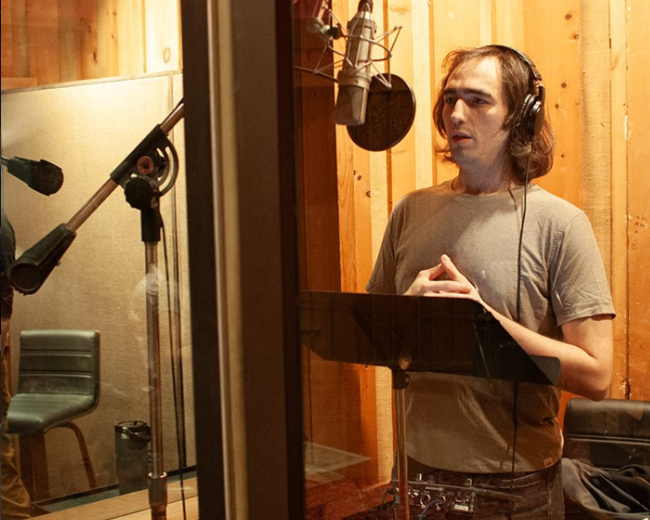
I grew up between a studio pianist father and the legacy of an opera singer grandfather, fell in love with making theater in a high school production of Ragtime, trained in jazz and opera, burned out, quit, and came back through a writing workshop I entered on a whim. Now I work as a music director, performer, composer/arranger, and voice teacher in New York City. And every one of those experiences lives in the room with me. This is the longer version.
What the air was made of
01
There was a piano at my father's parents' house, and I was there almost every day. My father had played sessions in New York in the 1970s: studios, late nights, the whole thing. And on my mother's side, my grandfather had been a professional opera singer. Music wasn't something our family did. It was just what the air was made of.
I don't remember not loving it. The Beach Boys cassette I wore out at three. Billy Joel, then Queen. In second grade, Mariah Carey's "Fantasy" on repeat until I had every run memorized. And around the same time, sitting at' piano picking out the opening of Moonlight Sonata by ear until I got it. Nobody showed me. I just wouldn't stop until I could do it. Something about that felt important.
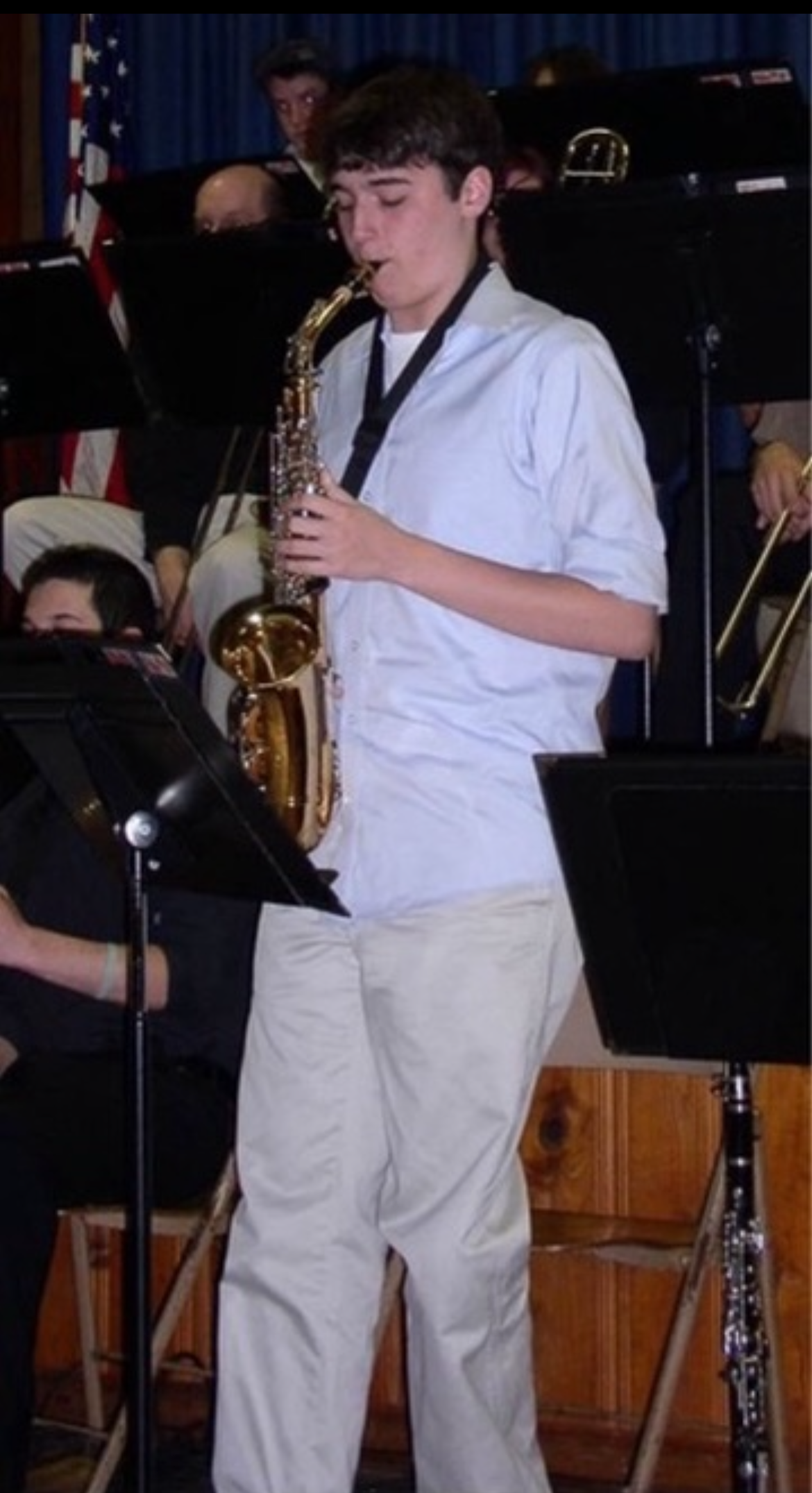
My mother put on movie musicals (The Sound of Music, Grease, Mary Poppins) and I fell in love with female singers. Julie Andrews first. Then the singers I found after: Karen Carpenter, Linda Ronstadt, Joni Mitchell. Voices that could break your heart in a single phrase and make it feel like a gift. In fourth grade I picked up the saxophone and jazz got its hooks in me. It was the beginning of my actual music education: jazz band by fifth grade, private lessons all through elementary, middle, and high school. I was going to be a saxophone player. That was the career. Meanwhile the bus was full of Eminem and the TV was full of TRL and I was absorbing all of it without any sense that it was supposed to be contradictory. It didn't feel contradictory. It all felt like the same thing: people making sounds that meant something.
Making theater with people
02
Somewhere in early adolescence the music got more private. I found Frank Sinatra and Sammy Davis Jr. (the ease, the swing, the way they made performing look effortless) and then Damien Rice and Nick Drake, which was the opposite of effortless, which was music that sounded like it cost something. I started writing songs around this time. Just voice and guitar, just for myself. Unrequited love, mostly. The things you feel so strongly you have to put them somewhere because you're too afraid to just say them out loud. I never showed anyone. That wasn't the point.
High school opened things up, and it started with my sister. She was a senior in the honors choir when I was a freshman, and I didn't realize how much I could love choir until I heard them rehearsing. The only way to join midyear was jazz choir, so I auditioned, and I got in. The teacher there pushed me to be a singer. He believed in me. That's when I started to want to sing. Piano, guitar, clarinet, even the saxophone: everything else became secondary to wanting to be a solo singe
Eventually I joined the honors choir, which introduced me to composers like Eric Whitacre and Morten Lauridsen: the way a room full of voices could become something larger than the sum of its parts, something that felt almost physical. Then I found the New York Voices, and something clicked into place: jazz and choral singing weren't separate worlds. They were the same world. I spent years chasing that sound and thought I wanted to study jazz, though I wasn't entirely sure. I applied to The New School for jazz, NYU Tisch for musical theater, and Ithaca for performance and education, and left the outcome up to chance. The New School was the only one that said yes.
But before I left there was Ragtime. I was cast as Tateh, and I wasn't prepared for what happened in that rehearsal room: not the show, but the people making it. The way everyone showed up for each other, in the work and outside it. The way the thing we were building couldn't have existed without every single person in the room. I didn't fall in love with musicals in that production. I fell in love with making theater with people. I've been chasing that feeling ever since.
03
Full immersion
The New School was jazz, full immersion. But I wasn't enjoying my education, and after a year I transferred to SUNY Fredonia for vocal performance.
Fredonia changed the center of gravity. I fell in love with classical art song there. With opera. With the way Schubert could hold grief and joy in the same breath. But just as much, I fell in love with collaboration: jazz band, student opera theater, jazz choir, the student organizations my friends and I got to build and run together. We led ensembles. Produced shows. Directed shows. Acted and sang in them. Organized masterclasses. It was the first time I understood how much a musical life could be made with other people, not just for them.
That was also where writing changed shape. Until then, I had written songs on guitar, mostly for myself. At Fredonia I started writing at the piano. I music directed a production of Pasek and Paul's Edges and started trying to write theater songs of my own. Mostly I shared them with friends. The songs were still private, but they were not completely hidden anymore.
That community pulled me forward. I followed friends into summer opera programs and ended up at Brevard Music Center, where I truly fell in love with opera and decided to pursue a master's in opera performance. Then came CCM, where I sharpened my skills, my ear, my discipline, and my understanding of what the work demanded. I spent two summers at Tanglewood Music Center and worked with artists like Dawn Upshaw and Stephanie Blythe. That was where I became an artist. Not just someone trying to sing well. Someone trying to understand what the music was asking for.
After finishing my master's coursework, I stayed at CCM and began an Artist Diploma. But my voice was giving me trouble, and more and more, I found myself at the piano: coaching classes, playing for classes, staying close to music when singing had become complicated. By the end of that year, I knew I needed to move back home to New York: to get healthier, and to figure out what kind of career I was actually trying to build.
It wasn’t one thing
04
Back in New York, I was cast as the lead tenor in the first workshop of Ricky Ian Gordon's opera Intimate Apparel. We workshopped it at the Metropolitan Opera. And my body couldn't keep up.
It wasn't one thing. A gluten allergy nobody had caught. Digestive issues, constant fatigue, injuries that never quite resolved. Years of it, compounding. The workshop showed me what it had cost: my voice wasn't functioning the way I needed it to, and I didn't know how to get myself back. Around all of that was the industry: the way it treated people, how much you could give and how little came back. I'd been pushing toward something for years, and I couldn't see it anymore. I lost my passion for singing. I lost myself a little. And I quit.
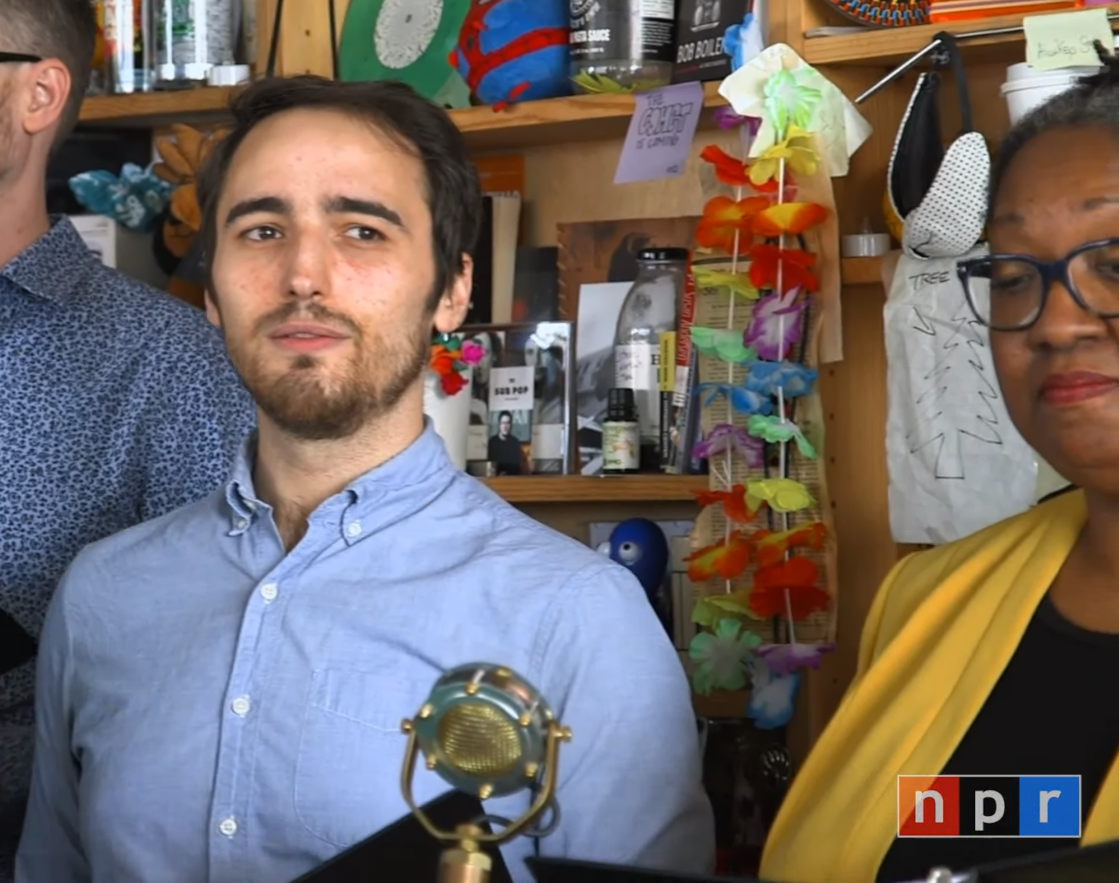
For a while I floated. I sang in professional choirs, and sometimes the rooms were extraordinary: The Crossing, the New York Philharmonic Chorus, NPR Tiny Desk Concerts, Carnegie Hall, Lincoln Center, the Philadelphia Orchestra. Some of that work led to Grammy-nominated recordings. From the outside, it looked like a career. But inside it, I felt like I was going through motions that belonged to someone else. The writing was the only thing that still felt like mine: theater songs, quietly, for no audience, just a way to stay tethered to music when the professional version of it had stopped feeling like something I could live in.
The door I stumbled through
05
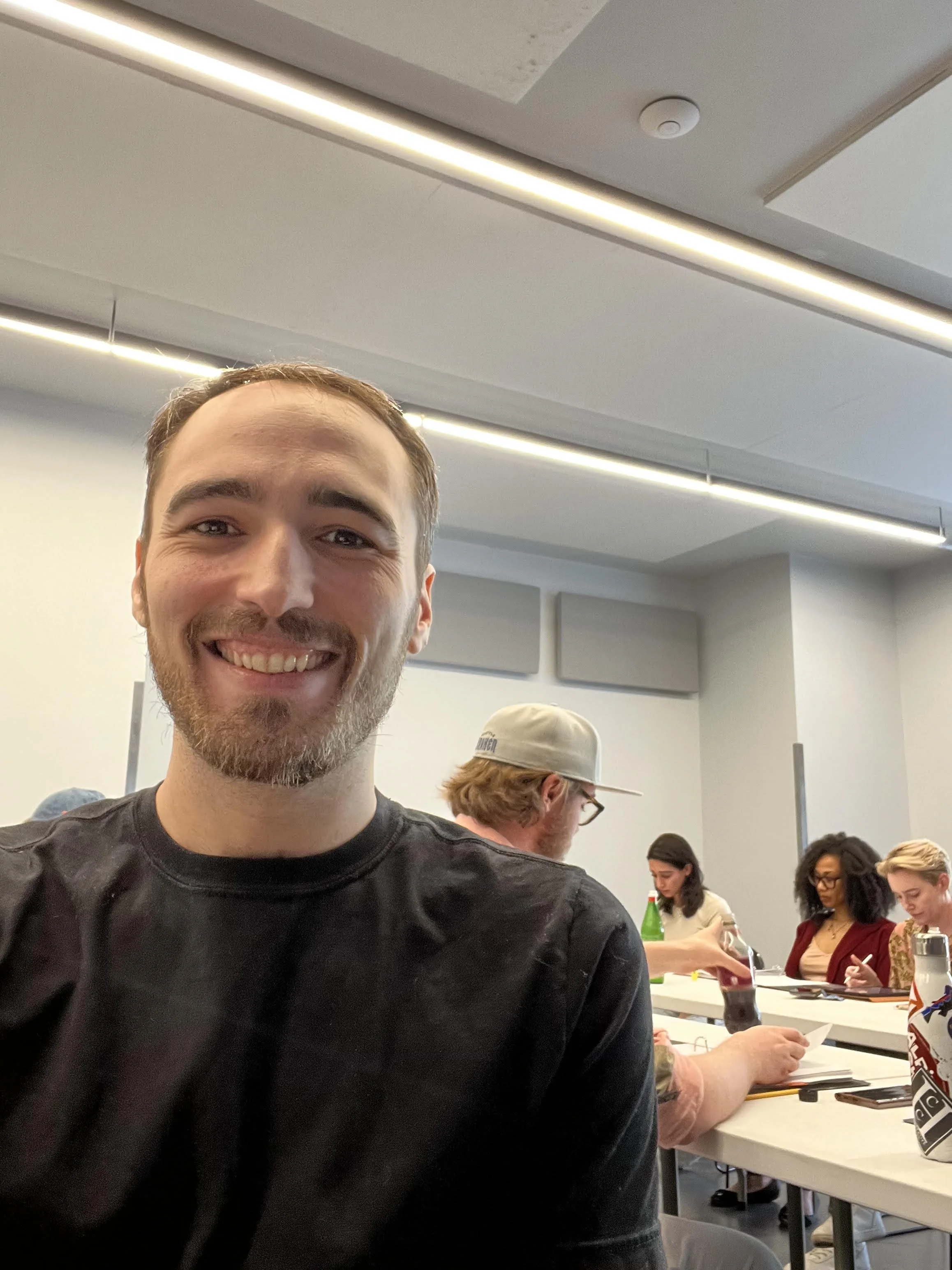
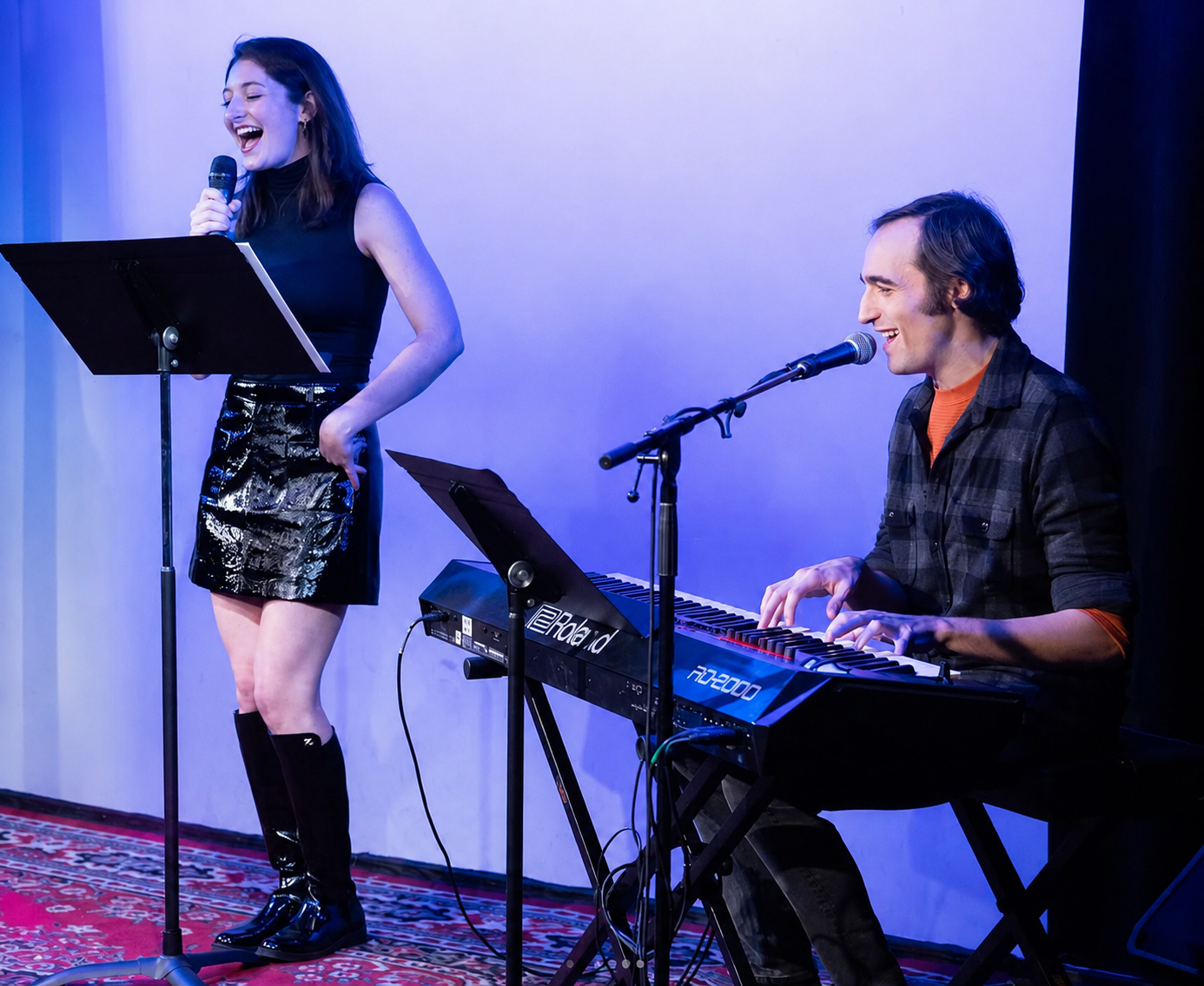
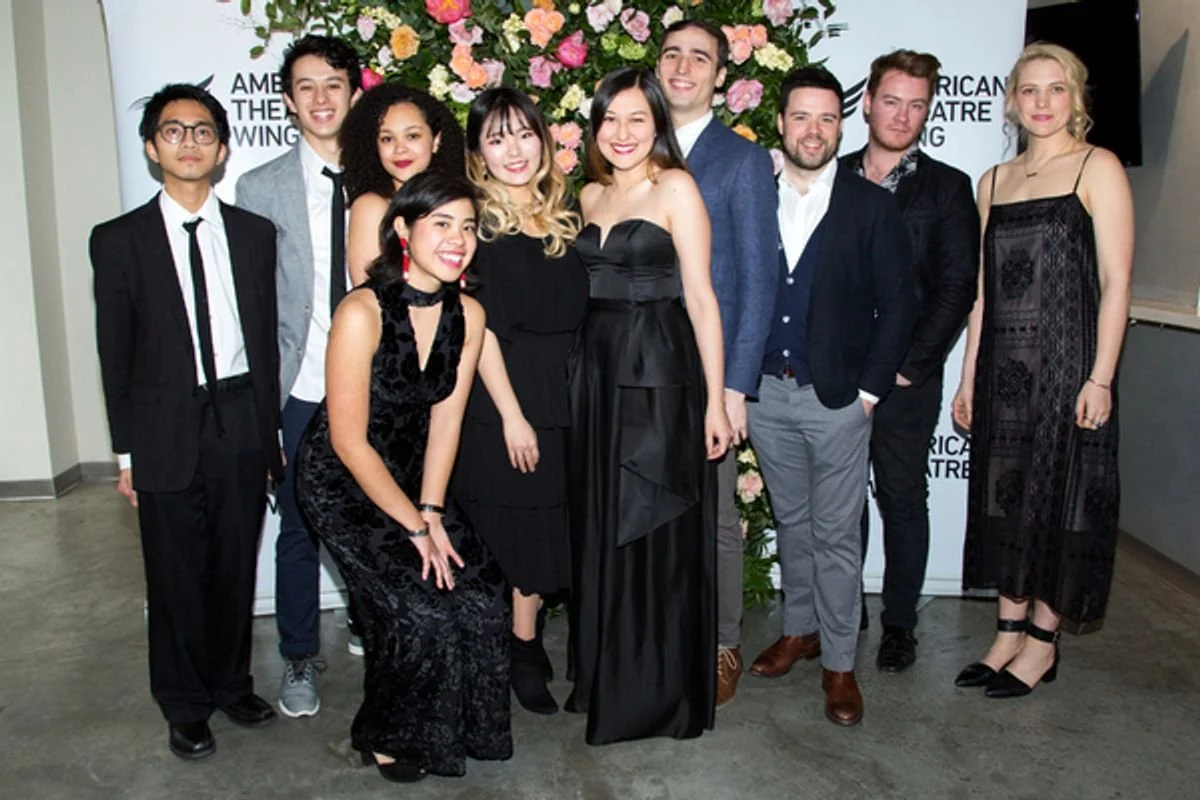
Then I saw an ad for the BMI Advanced Musical Theater Writing Workshop and submitted three songs on a whim. I don't know exactly what I expected. What happened was that I discovered I knew what I was doing: as a writer, as a collaborator, as someone who understood how a room of people make something together. I started music directing for my peers. I started performing for them. I found my way back into rehearsal rooms. And somewhere in all of that, without quite meaning to, I came back to the thing I had loved since Ragtime: not musicals, but the people making them.
Around the same time, Park Avenue Synagogue became another kind of home. I had been singing in the Saturday morning quartet for three years when the pandemic shut live performance down. When services changed shape, I offered to write and arrange. I was self-taught, but they believed in me and gave me room to grow inside the work. Over time, that work became central to how I understood myself: not only as a singer or composer, but as an arranger and orchestrator.
The music directing grew. What started as workshops for my BMI classmates became concerts, then productions outside the workshop. That work, together with everything I was learning at Park Avenue Synagogue, built the résumé and the connections that led to working for Or Matias, Dave Malloy, and Duncan Sheik. The rooms got bigger. The work stayed the same: people making something together.
This is also why I teach: to help the people I work with get better at the things they love doing. I've done this work myself, in lessons, in physical therapy, and in the study of Alexander Technique, trying to understand what actually gets in the way of a voice. As I let go of the expectations I'd placed on myself and released the tension I was carrying, my voice freed up. I could sing things I'd struggled with for years. My work often starts with subtraction. Stop gripping. Stop bracing. Stop fighting yourself. A singer who isn't fighting themselves can do anything the music asks.
The room where
people make things
06
I've built a career as a professional choral singer, a professional opera singer, a music director, a composer, an arranger, an orchestrator, and a voice teacher. I applied to three colleges out of high school and only got into one. I trained for one life, quit it, and found my way into another through a writing workshop I entered on a whim.
But I don't think of those as separate lives anymore. They all come from the same place: a kid at a piano, a saxophone player who became a singer, a singer who became a writer, a writer who became a music director, a teacher still trying to understand what helps people do their best work.
What has stayed constant is the room. The people in it. The thing everyone is trying to build together. That is what I loved in Ragtime. That is what I found again at BMI. That is what I look for in rehearsals, lessons, services, concerts, and new work. I never planned the career I have. But it all comes from the same place it always did: the room where people make things together.
Performance highlights
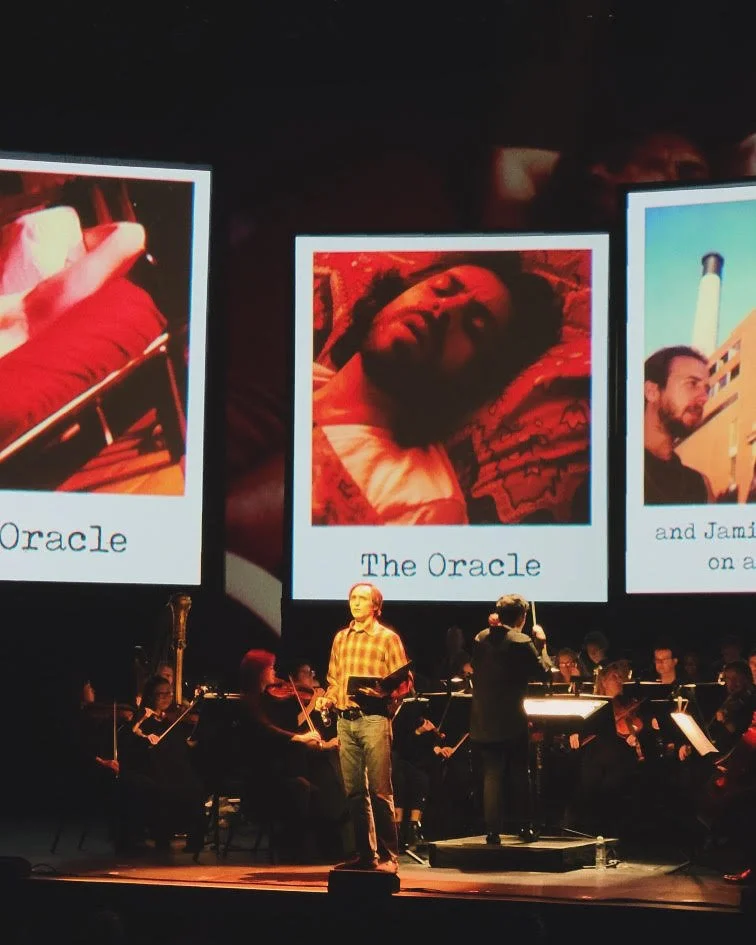
I've sung with YEBBA, the Boston Pops, Tanglewood Music Center Orchestra, New York Philharmonic, Choir of Trinity Wall Street, and the Mark Morris Dance Group. My voice appears on Last Week Tonight's EMMY-nominated Eat Shit Bob: The Musical and on two GRAMMY-nominated recordings with The Crossing: The Arc in the Sky (2019) and Rising with The Crossing (2022). Recent roles include The Oracle in Luna Pearl Woolf's Number Our Days at the Perelman Arts Center and Yudel Mark in Alex Weiser & Ben Kaplan’s The Great Dictionary of the Yiddish Language with American Opera Projects.
I've sung with YEBBA, the Boston Pops, Tanglewood Music Center Orchestra, New York Philharmonic, Choir of Trinity Wall Street, and the Mark Morris Dance Group. My voice appears on Last Week Tonight's EMMY-nominated Eat Shit Bob: The Musical and on two GRAMMY-nominated recordings with The Crossing: The Arc in the Sky (2019) and Rising with The Crossing (2022). Recent roles include The Oracle in Luna Pearl Woolf's Number Our Days at the Perelman Arts Center and Yudel Mark in Alex Weiser & Ben Kaplan’s The Great Dictionary of the Yiddish Language with American Opera Projects.
Eat Shit Bob: The Musical - Last Week Tonight
Lead Tenor Squirrel/Ensemble
EMMY-nominated segment
Great Dictionary of the Yiddish Language
Yudel Mark - Principal
American Opera Projects
Evergreen
Chorus Tenor
YEBBA
Demons In The Dawn
Keyboards and Electric Bass
Sick Man’s Mill
Giants in the Sky
Simply Sondheim Revue - Principal
Boston POPS
Andro ramingo e solo w/ Dawn Upshaw
Idomeneo - Lead Tenor
Tanglewood Music Center Orchestra
Let’s work together
Now that you know me, let me know a bit about you!