Voice lessons
grounded in
release, not effort.

Most voice teachers tell you what to do. I ask you to stop. Not stop singing, stop managing. Stop controlling. Stop trying to sound like the voice in your head.
If singing feels harder than it should…

You’re pushing instead of coordinating.
Tension builds, the throat closes, and the voice won’t move.
You over-manage and overthink.
Too much focus on how you should sound becomes the obstacle
to actually sounding that way.
Your range and registers feel inconsistent.
Shifts are unreliable and the upper voice feels out of reach.
You second-guess your technique.
What you’re told in lessons and what your body does
don’t always line up.

Performance pressure takes over.
You lose freedom, and what gets in the way keeps getting in
the way.

What changes in lessons
More ease, less effort.
You find the release that lets the technique happen, rather than the effort that prevents it.
More reliability across your range.
You stop bracing for the hard parts of your voice, and registration starts to organize instead of splinter.

Clearer understanding.
The instruction isn’t wrong. The execution is. You learn why, and what to do instead.

More freedom and expression.
What a song means and what the body needs to do to express it are not separate questions.
Sustainable vocal health.
A singer who isn’t fighting themselves can do anything the music asks.
HOW I TEACH
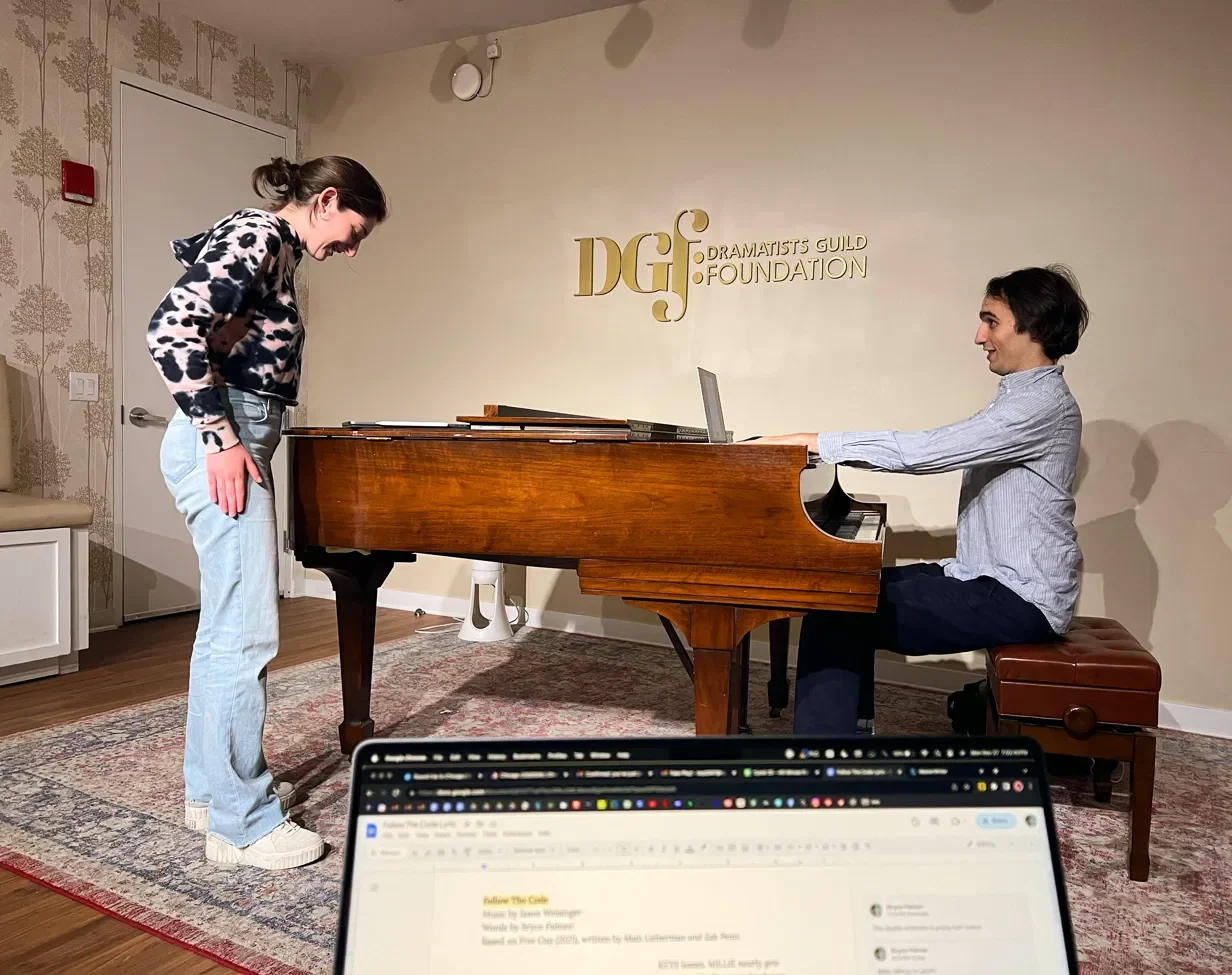
A lesson with me is a conversation
between you, your instrument, and what
the music is asking for.
“Open your throat.” Most singers hear that and actively try to create openness, which creates tension, which closes the throat.
“Support more.” Most singers brace, which locks the breath rather than freeing it. The instruction isn’t wrong. The execution is. And the execution is wrong because the mind is trying to manufacture a result instead of allowing one.


It starts with you.
Every lesson is a conversation between what you feel, what you hear, and what the music is asking for.
Body-led technique.
We use exercises designed to remove the idea of making a good sound entirely, so the body can organize more freely.

The form changes.
The principle doesn’t.
A scale, a song, and an audition cut
may ask different things, but the work is the same: less interference, more availability.

Practical results.
Technique is always connected to what you need in rehearsal, audition, performance, or the practice room.
What we work on

Breath, Resonance &
Registration
Support that frees the throat and lets your voice connect across all registers.

Musical Theater & Contemporary Styles

Belting, mix, legit, and the transitions between them, shaped with style and intention.
Classical &
Legit Repertoire
Art song, opera, and oratorio.
Built on the Italian school and
healthy vocal function.

Audition &
Performance Prep

Song choice, material prep,
stage presence, and the tools
to deliver with confidence.
Healthy, Sustainable
Vocal Function
Build a voice that’s consistent,
free, and ready for the demands
of professional performance.
Who it’s for

I work with committed singers who are serious about their development:
pre-professional and professional performers who want intelligent, body-led work that results in real freedom and reliability.
Musical theater singers
Classical and crossover singers
Performers who sing on Broadway and Off-Broadway
Members of professional choruses and orchestras
Students in conservatories and advanced training programs
Professional artists who want to understand what’s actually getting in their way
If you’re ready to stop fighting and start collaborating with your voice,
I’d love to work with you.
Lesson details

I teach lessons in-person in New York City and online.
Currently accepting a limited number of new students.
During production periods, availability is typically limited
to two evenings per week.I’m most available between productions.
If you’re interested in working together, reach out and
we’ll find a time that works.
Lessons are for focused singers ready to engage at a high level and do the work.
A singer who isn’t
fighting themselves can
do anything the music asks.
If you’re ready to stop fighting and start collaborating with your voice, I’d love to work with you.